FAQs on Homebirth & Midwifery Care
We Know You Have Questions
-
Comfort and relaxation lead to fewer interventions. Continuity of care increases rates of natural birth. Our prioity is maintaining respect for the baby/parent dyad.
-
As your midwives, our role during your labor is to provide support, maintain a safe environment, and allow the natural process of birth to unfold. Throughout labor and birth, we are carefully monitoring for any signs that something may be moving outside the range of normal.
We are trained to recognize early warning signs, address common complications, and determine when a hospital transfer is appropriate. We also screen throughout pregnancy for conditions that may make hospital birth a safer option.
As a result, serious emergencies during home birth are relatively uncommon, and many of the more common complications, such as postpartum hemorrhage or neonatal resuscitation, can most often be managed at home. More often, a hospital transfer during labor is not due to an emergency but rather to exhaustion, a long labor, or a request for additional pain relief, particularly for first-time birthing parents.
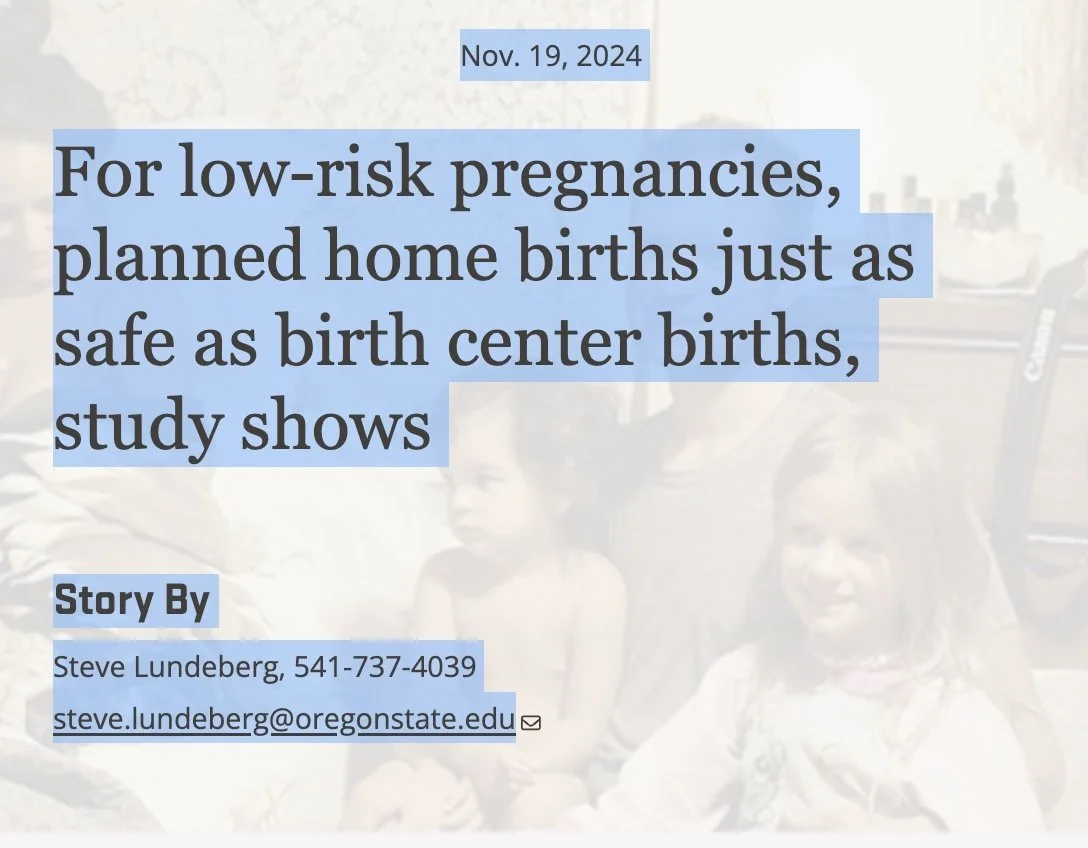
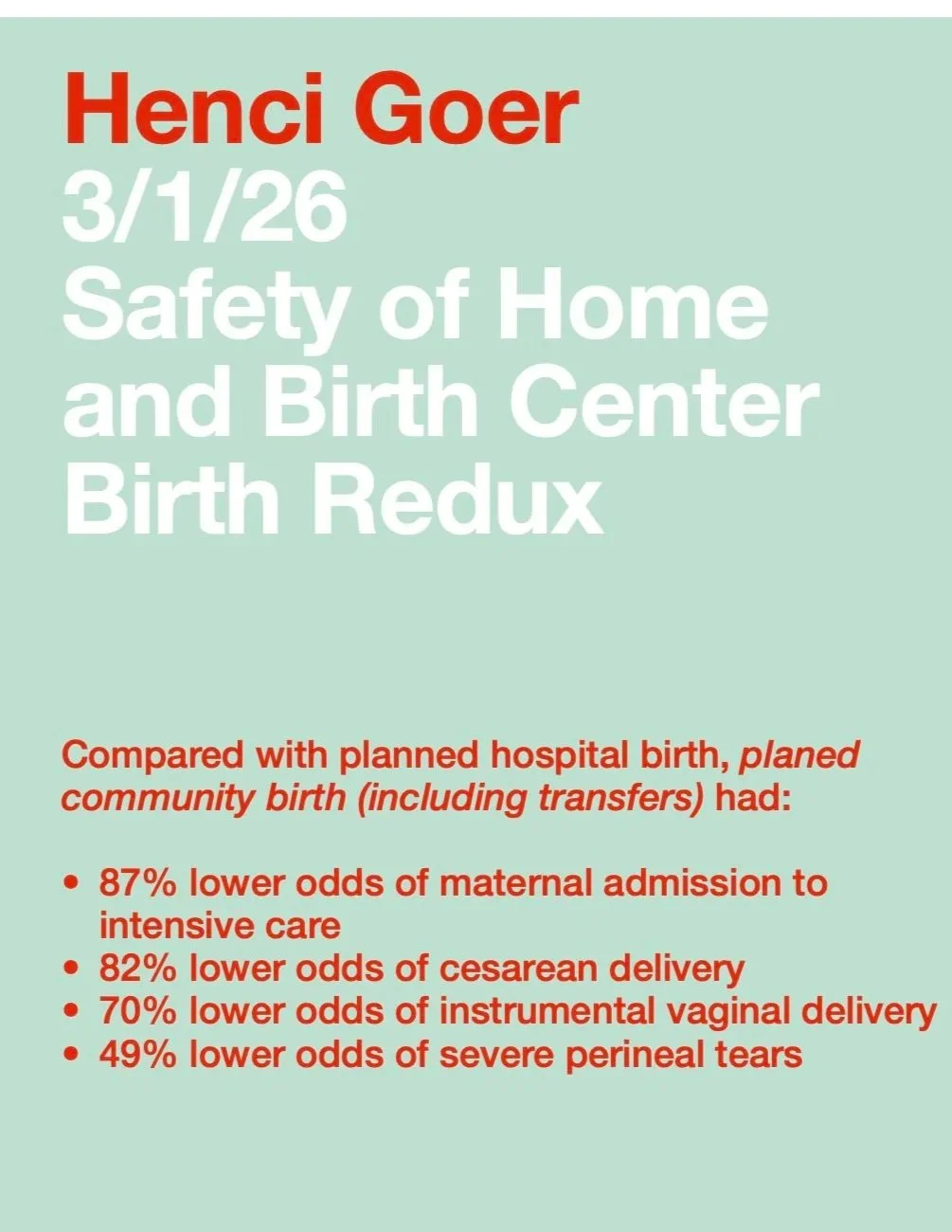
Visit our research section below for more statistics on community birthing.
-
We bring MANY supplies. Here are some highlights:
Doppler to listen to the baby's heart rate
Resuscitation equipment including a bag and infant/adult masks
Suction devices to clear mucus and other material from the baby's nose and mouth
Drugs for preventing, and/ or stopping the birthing person from bleeding too much
Herbal and homeopathic remedies
Sterile instruments for the birth and immediate postpartum
IV supplies and fluids
Antibiotics for GBS positive people who desire them
We also ask our families to collect items in preparation for the birth, such as baby blankets, towels, an extra pair of sheets, and a bowl for the placenta
-
We clean up after ourselves and often the only signs that remain are a baby, a big bag of laundry, a medium sized bag of garbage and a small bag of recycling. During the labor we try to catch as many of the fluids and mess in disposable absorbant materials.
-
It’s most likely bigger than a hospital room!
-
Water is an incredible tool for comfort during the labor and birth process.
Several different kinds of tubs are available for rent in the community, including from Natural Resources.
This article on The Evidence on Water Birth is a great one to check out.
-
As soon as you know you want midwifery care! We can start doing genetic testing at 10 weeks, and can often hear the hearbeat with a doppler then too. But lots of people take longer to find their midwife and start care in the second, or even third trimester.
-
Everyone should have a plan of where to get care if something beyond midwifery care is needed. San Francisco hospitals are great and we have good relationships with UCSF, Kaiser, Sutter/CPMC Mission Bernal and Marin Health.
-
We offer a sliding scale that typically goes from $6,500 to $8,000 but sometimes we can offer our services for even less.
-
PPO insurance plans often cover some of the costs of midwifery care and homebirth. it all depends on the specifics of your plan. We can often help arrange a verification of benefits to give an estimate of what might be covered. We can also provide a receipt for FSA accounts.
-
Sometimes births are best done in the hospital. if that’s the case we go with you to support and advocate. Once you get home we continue to provide postpartum care.
-
Anyone you invite! Though generally it’s more of a private experience than a house party.
-
Midwives provide complete perinatal care - from clinical to emotional. We can assess conditions beyond a doula’s scope but are also happy to work with doulas for their physical and emotional support of our mutual clients.
Research Information